Dear Haiti Friends,
Shelter Project: I am happy to tell you that construction on the shelter project for displaced persons in the Central Plateau has begun. Mirebalais is still under gang control, and more than 200,000 adults and children have been forced to seek refuge elsewhere, some still living outside without shelter. Foundations have been poured for the first shelter and with a recent additional check for $5000, cement blocks have been purchased, with wall construction planned to begin this Friday. I received pictures from the foundation construction in process which I am delighted to pass along.
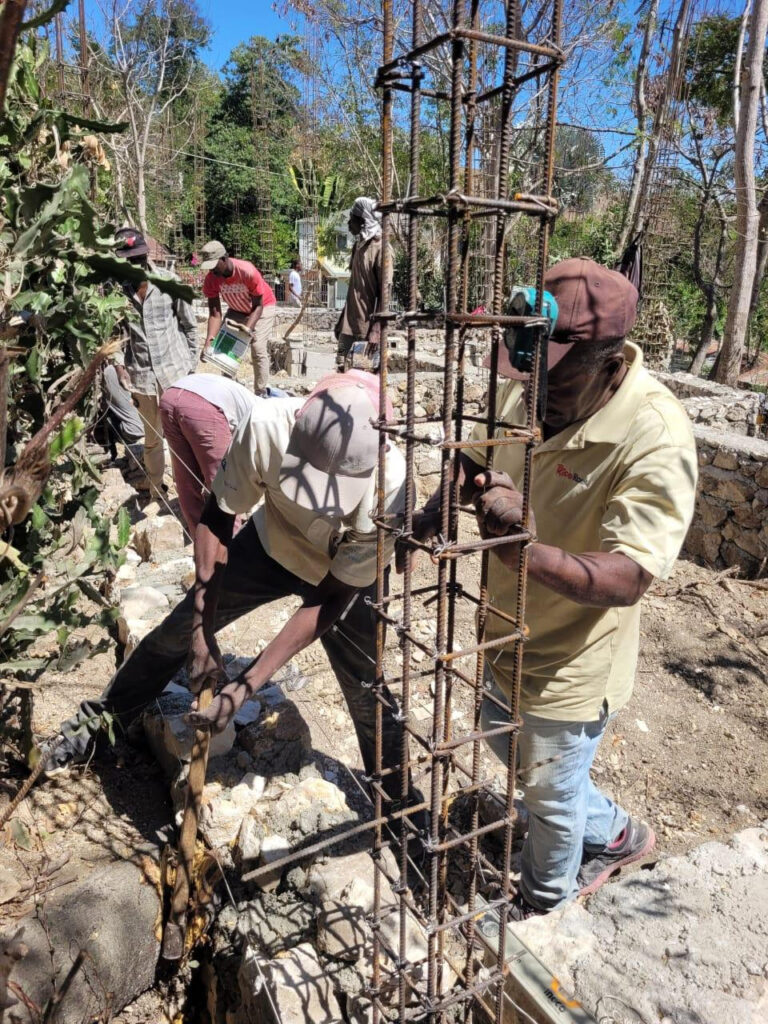
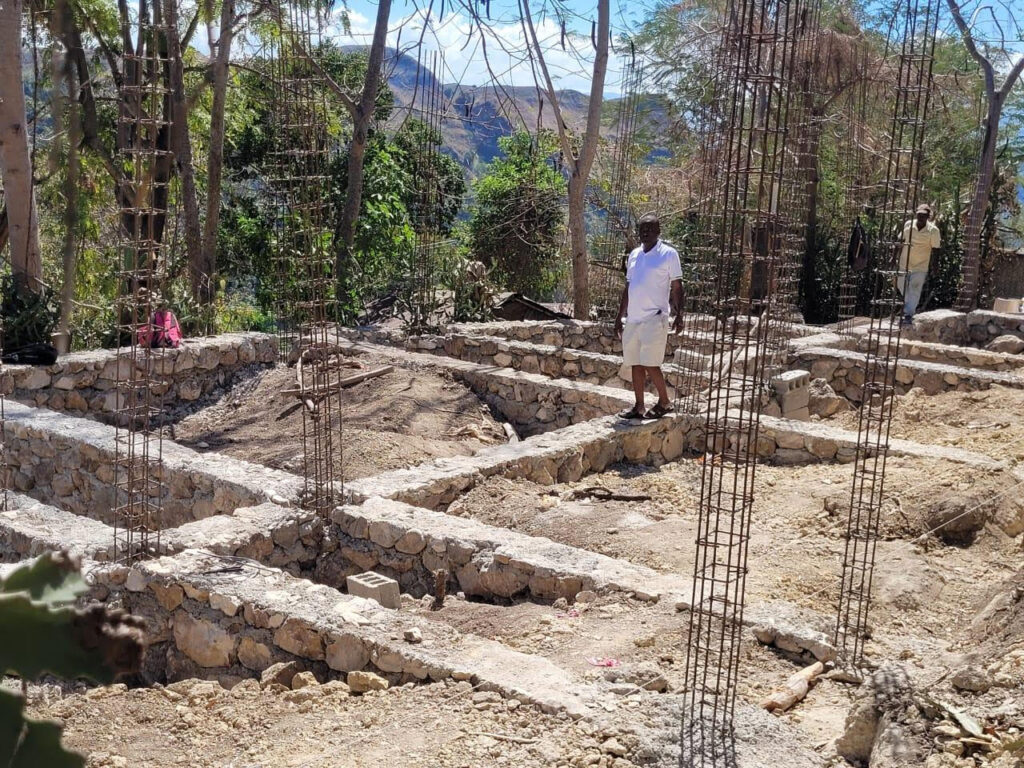
Funds sent recently have included gifts honoring the memory of the late and beloved Rt. Rev. Chester Talton, who travelled to Haiti in 2011 with his wife, April Grayson Talton. Many, many thanks to April for suggesting that his memory be honored in this way.
Fund Transfers: With increased scrutiny of transfers outside of the United States, it is more important than ever that you send a very clear email to all persons on the notification list to say that the funds are on the way and for which church or school, location, and partner priest they are intended. The Diocese of Haiti receives transfers of at least $100,000 per month, often considerably more, from the estimated 100 or so school and church partnerships sending funds monthly, quarterly, annually when there’s a fundraiser, or sporadically as it comes in. There’s no staff to do the bookkeeping, so it is done by the Standing Committee and the Partnership Coordinator in Haiti, the Rev. Kesner Gracia. All of them have more than full-time jobs in addition to their work for the diocese. If a transfer arrives without information, no one knows it’s there until the bank statement comes, and then they don’t know where it has come from as the bank statement only reports a deposit without information about the source. With uncertain internet connectivity, not everyone receives e-mail in a timely fashion, and many receive it on their phones which means mail that has come in late is way down at the bottom of the list and may not grab attention. This is also why partner priests are encouraged to call Pere Gracia promptly if they don’t hear from the Diocese when they expect a transfer. If transfers pile up in the bank without being disbursed, they attract attention from the government entities looking for money-laundering operations.
I have heard from one partner who tells me that the increased scrutiny has meant that the investigators demand on wire transfers a zip code for the receiving entity (not the bank) and also a phone number. Haiti hasn’t had universal mail service for quite a while, but at one point postal codes were assigned. The church office is in gang-controlled territory, but the phone number still exists. If you are asked, you may try using 01 509 2941-7771 (509 is the country code) for the telephone number and Postal Code 1309.
Haiti Advocacy Ministry located in the Washington DC/Northern Virginia area is sponsoring a prayer service for Haiti this Saturday, February 28 at the Virginia Theological Seminary, and both the service and the forum following lunch will be livestreamed. One of the persons speaking at the forum is from Fonkoze, a major force in micro-loans in Haiti. You are welcome to tune in to either or both. From Karen Wires at Haiti Advocacy Ministry:
Because of the generosity of the Seminary, we are able to stream both the 11:00 AM (Eastern Standard Time) Prayer Service and the Afternoon Forum at 12:45 PM; and here are the links:
Here is the link for 12:45. Feel free to share these. The Youtube link can only be viewed from this link, not on the Youtube channel.
And finally, always looking for a bright spot: Many of us, especially those of us of a certain age, wonder what will happen if we can no longer travel to Haiti any time soon and bring younger generations to experience and appreciate all of the things about Haiti that are good, interesting, compelling, admirable, instructive, and beautiful. Where will the next advocates, allies, and friends come from? I had an answer while attending a school’s annual Haiti fundraiser last week (excellent catered Haitian food — let me know if you’d like the Los Angeles area contact.) A familiar face from ten years ago gave me a hug and said, “Remember me?” I certainly did — she was an enthusiastic student who had travelled to Haiti with the school three times. When I asked what she’d been doing since then, it was college, then a Master’s Degree with a thesis on the rather fraught economic relationship between Haiti and the Dominican Republic, followed by three years of work in Haiti for USAID in Cap Haitien. When the funding was cut last year, she had to come home, but is anxious to get back as soon as possible. So we don’t need to ask where the next generation is coming from — they are already at work, God bless ’em.
Yours,
Serena